
Top Signs You Need Gate Repair Service — Don’t Ignore These
A gate that starts acting up isn’t just an annoyance; it’s often a loud warning sign that something is about to fail. Many homeowners in Las Vegas mistake these early symptoms for quirks or minor inconveniences, putting off repairs until the gate completely stops working or, worse, becomes a safety hazard. We’ve seen firsthand how catching these issues early can save you significant time, money, and potential headaches. Ignoring a grinding noise or a gate that reverses unexpectedly can turn a simple fix into a costly replacement. Prime Las Vegas Gate Repair Specialists, led by owner Terry Alexander, believes in empowering you with the knowledge to spot these problems before they escalate.
If you’re in Las Vegas and experiencing gate troubles, don’t wait for a complete breakdown. Call us today at (725) 600-6299 for a free estimate. We handle everything from minor adjustments to complex motor replacements for brands like LiftMaster, FAAC, and Viking.
Is Your Gate Making Strange Noises? That’s a Red Flag
The soundtrack of a failing gate is often a symphony of unwelcome noises. A loud grinding or screeching sound when your gate operates is a classic indicator that something is seriously wrong internally. This isn’t just a bit of wear and tear; it typically points to issues with the internal gears of the gate motor, worn-out bearings, or even obstructions within the track system. In Las Vegas, where dust and sand can accumulate, these particles can grind away at critical components over time. For instance, we recently worked on a gate in the Green Valley area where the grinding was so severe, it was practically deafening. Upon inspection, we found a buildup of debris in the motor housing that had chewed through the primary drive gear. Replacing just the gear was a far less expensive solution than if the motor had seized completely.
Other noises to listen for include clunking, which can signify loose hardware, a bent component, or a motor struggling to engage properly. A clicking sound might indicate a problem with the limit switches or an electrical relay. Don’t dismiss these sounds as just “quirks.” They are your gate’s way of telling you it needs attention. Ignoring them in our Las Vegas climate, with its extreme temperature swings, can exacerbate the damage. For example, a motor that’s already straining might overheat more easily on a scorching summer afternoon in Las Vegas, leading to premature failure.
- Grinding/Screeching: Often points to worn motor gears, bearings, or track obstructions.
- Clunking: May indicate loose hardware, bent components, or motor engagement issues.
- Clicking: Could signal problems with limit switches or electrical relays.
A Sagging or Uneven Gate Isn’t Just Ugly — It’s a Structural Problem
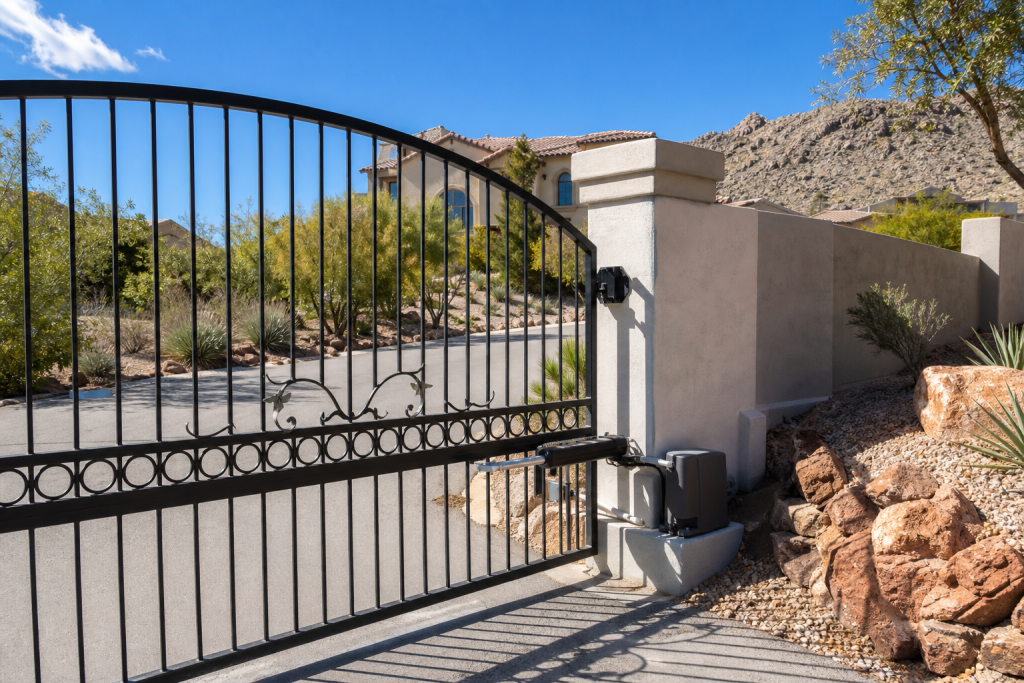
Visually inspecting your gate is crucial. One of the most common signs we see in Las Vegas homeowners is a gate that has started to sag or appears uneven. This isn’t merely an aesthetic issue; it’s a significant structural problem that can lead to further damage and operational failure. A sagging gate often means the hinges are worn or damaged, the gate itself might be developing a warp, or the support posts are no longer plumb. In Las Vegas, the intense sun and occasional high winds can put stress on gate structures, especially if they aren’t properly reinforced or maintained. We’ve seen gates in areas like Summerlin that have started to lean because the posts weren’t set deep enough or the soil shifted over time.
When a gate sags, it puts uneven pressure on the gate motor and its internal components. This can cause the motor to work harder than it should, leading to overheating and premature wear. It can also cause the gate to bind or scrape against the ground or other obstacles, potentially damaging the gate itself or the surrounding pavement. In cases of severe sag, the gate might not be able to close completely, compromising your property’s security. We recently addressed a situation in Henderson where a homeowner’s gate was dragging on the driveway, causing significant wear. The culprit? A combination of worn hinges and a slight lean in one of the posts, made worse by the heat. Addressing this early prevented further damage to the track and the motor.
Key indicators of structural issues:
- Visible lean in gate posts.
- Gate not hanging level.
- Gate scraping the ground.
- Hinges appearing worn or bent.
Erratic Gate Behavior: Reversals, Hesitation, and Slow Travel
Automated gates are designed to operate smoothly and predictably. When your gate starts behaving erratically — reversing its direction without reason, hesitating mid-operation, or moving significantly slower than usual — it’s a clear signal that something is amiss. These aren’t just “glitches”; they’re often symptoms of underlying electrical or mechanical problems. In Las Vegas, temperature fluctuations can play a role. A gate motor that’s struggling on a hot day might slow down considerably, or a safety sensor that’s slightly misaligned due to expansion and contraction could trigger an unexpected reversal. We often find that a dirty or misaligned safety sensor is the cause of random reversals, and cleaning or repositioning it is a quick fix.
Hesitation can point to a motor that’s losing power, a faulty capacitor, or a problem with the control board. Slow travel is another critical sign that the motor is under strain. This could be due to internal motor wear, a lack of lubrication in the gate’s moving parts, or an issue with the power supply. For example, we had a call from a property manager in the Arts District of Las Vegas about a gate that was moving at a snail’s pace. It turned out the main drive chain was loose and slipping, causing the motor to struggle and move the gate erratically. Addressing this promptly prevented further damage to the chain and the motor.
What erratic behavior means:
- Random Reversals: Often a dirty or misaligned safety sensor, or a faulty safety edge.
- Hesitation: Could be a weak motor, capacitor issue, or control board problem.
- Slow Travel: Suggests motor strain, lack of lubrication, or power supply issues.
Remote Control and Access System Issues Signal Underlying Problems
Your gate’s access control system, whether it’s a remote, keypad, or intercom, is the gateway to your property. When these systems start to falter, it’s more than just an inconvenience; it can be a security concern. Reduced remote range, intermittent keypad failures, or intercom static are all signs that the gate’s electrical system or the access control components themselves need attention. In Las Vegas, the intense sunlight can sometimes affect the performance of wireless receivers, and extreme heat can impact the electronics within keypads. We’ve seen systems where the receiver antenna was corroded by sand and dust, significantly reducing the effective range of the remote. This is particularly common in areas with a lot of exposed outdoor equipment.
Keypad issues, like buttons not responding or error messages, can stem from worn-out internal components, water ingress, or connection problems. If your remote’s range suddenly drops dramatically, it could be a sign of a failing transmitter in the remote itself, interference from new electronic devices nearby, or an issue with the gate’s receiver. We had a client in Anthem Country Club whose remote was only working when they were practically touching the gate. It turned out the receiver unit on the gate operator had partially failed due to heat exposure, and a simple replacement restored its full functionality. Don’t underestimate these “minor” electronic hiccups; they can often be early indicators of more significant electrical problems within the gate operator system.
- Reduced Remote Range: Can signal a failing remote transmitter, receiver issues, or interference.
- Keypad Malfunctions: May indicate worn buttons, water damage, or connection problems.
- Intercom Static/Failure: Often points to wiring issues or problems with the intercom unit itself.
Visual Clues You Might Be Overlooking
Beyond the obvious mechanical noises and operational hiccups, there are subtle visual cues that can indicate your gate is in need of repair. These are the hairline cracks, the rust blooms, and the slight post lean that many homeowners might overlook. In Las Vegas, our dry climate and intense sun can accelerate rust formation, especially on metal components like hinges and welds. Even a small rust spot can be the beginning of a structural weakening. We often find hairline cracks in welds, particularly near the hinges or on the gate frame, that are invisible unless you’re looking closely. These cracks can expand over time, compromising the gate’s integrity.
A post that has started to lean, even by an inch or two, can put significant stress on the gate and its operator. This lean can be caused by soil erosion, shifting ground, or simply the weight of the gate over years of use. We recently inspected a gate in Lake Las Vegas where one of the gate posts had shifted slightly, causing the gate to bind. While the gate was still technically functional, the binding was causing excessive wear on the motor. Addressing the post lean early prevented further damage. Similarly, a gate that doesn’t close completely, leaving a gap, is not just a security flaw but can also indicate a problem with the limit switch or the gate’s alignment. These visual indicators are often the earliest warnings of impending issues.
- Rust Bloom: Especially at weld points and hinges, indicating potential structural weakness.
- Hairline Cracks: Found on welds or the gate frame, these can spread and compromise integrity.
- Post Lean: Even a slight lean can cause binding and stress on the gate and operator.
- Incomplete Closure: A gap when closed can signal alignment or limit switch issues.
The Las Vegas Summer Thermal Bind Phenomenon
One specific issue we frequently encounter in Las Vegas, particularly during the scorching summer months, is what we call “thermal bind.” You might notice your gate operating perfectly fine in the cooler morning hours, only to find it struggles to close or even won’t move at all when the temperature soars in the afternoon. This isn’t a sign of a remote problem or a major electrical failure; it’s a direct result of thermal expansion. Metal components, including the gate itself, the tracks, and even the motor housing, expand as they heat up. In a system that’s already tight or has minor alignment issues, this expansion can cause the gate to bind against its tracks or frame.
When this happens, the gate motor is forced to work against this increased resistance. If the motor isn’t powerful enough, or if it’s already weakened, it might overheat and shut down as a safety measure, or simply fail to overcome the resistance. Sometimes, a gate that appears to be working fine in the morning might be just on the edge of binding, and the afternoon heat is the final straw. Addressing thermal bind often involves ensuring proper lubrication of the gate’s moving parts, checking for any minor obstructions in the track, and verifying that the gate is properly aligned. In some cases, minor adjustments to the gate’s structure or the installation of a more robust motor might be necessary to combat the effects of our intense Las Vegas summers. It’s a common problem here that many other regions don’t experience to the same degree.
Recognizing thermal bind:
- Gate works fine in the morning, but struggles or stops in the afternoon heat.
- Increased resistance felt when manually trying to move the gate on hot days.
- Gate operator motor sounds like it’s straining excessively in high temperatures.
When to Call a Pro: Don’t Wait for a Breakdown
While some minor gate issues might seem like DIY fixes, many of the signs we’ve discussed point to problems that require specialized knowledge and tools. Attempting complex repairs without the right expertise can lead to further damage, void warranties, or even create safety hazards. If you’re noticing any of the mechanical noises, erratic behaviors, electrical glitches, or visual cues we’ve outlined, it’s time to consider professional help. For homeowners in Las Vegas, especially with automated systems from brands like LiftMaster, FAAC, BFT, Linear, Viking, Ghost Controls, DoorKing, Elite, and Mighty Mule, bringing in a specialist ensures the job is done right the first time. We have over 231 verified reviews with a 4.9-star average, a testament to the quality of work Terry Alexander and our team provide.
At Prime Las Vegas Gate Repair Specialists, we understand that gate failure isn’t just an inconvenience; it’s a security risk and a major disruption to your daily life. Our owner-operated business means you get direct expertise on every job. We also offer on-site welding and parts fabrication, meaning we can often complete complex structural repairs in a single visit, something many other companies can’t do. Don’t let a small problem turn into a big one. If your gate is showing any of these warning signs, give us a call.
The Bottom Line
Recognizing the early warning signs of gate malfunction is key to preventing costly breakdowns and ensuring your property’s security. Noises, erratic behavior, visible sagging, electrical issues, and even subtle visual clues are all indicators that your gate needs attention. Ignoring these signs in the unique Las Vegas climate, with its extreme temperatures and dust, can accelerate wear and tear on critical components. If you’re in Las Vegas and need help with any of these issues, Prime Las Vegas Gate Repair Specialists offers free estimates and expert service. Call us today at (725) 600-6299.
Frequently Asked Questions
The most common gate repair issues we see in Las Vegas include gate motors struggling due to heat and dust, worn-out gears and bearings causing grinding noises, sagging gates due to hinge wear or post lean, and erratic behavior like random reversals often caused by misaligned safety sensors. Thermal bind, where gates struggle in the afternoon heat due to expansion, is also a frequent problem here. Call (725) 600-6299 for an estimate.
While some very minor adjustments might be DIY-friendly, most gate repair issues, especially those involving motors, electrical systems, or structural integrity, are best handled by a professional. Incorrect repairs can lead to further damage, void warranties, or create safety hazards. For reliable service on brands like LiftMaster or FAAC, it’s always recommended to call a specialist like Prime Las Vegas Gate Repair Specialists.
The cost to repair a gate motor in Las Vegas can vary widely depending on the specific issue and the brand of the motor. Simple repairs like replacing a capacitor or cleaning sensors might range from $150 to $300. However, if the motor needs to be replaced entirely, costs can range from $450 to $800 or more, depending on the model and complexity. Factors like the brand (e.g., LiftMaster, FAAC) and the type of gate also influence pricing. For an exact quote tailored to your situation, call us at (725) 600-6299 for a free estimate.
If your gate suddenly stops working in extreme Las Vegas heat, it’s often due to thermal overload or thermal bind. First, check if the gate operator has an emergency stop button or a reset mechanism that might have tripped. Allow the motor to cool down for at least 30 minutes before attempting to operate it again. If it still doesn’t work after cooling, or if it only works intermittently, it’s a sign that the motor might be overheating due to strain or internal issues exacerbated by the heat. It’s best to call a professional like Prime Las Vegas Gate Repair Specialists at (725) 600-6299 to diagnose and address the underlying cause, preventing further damage.
Reviewed by Terry Alexander, Owner & Lead Technician at Prime Las Vegas Gate Repair Specialists, serving Las Vegas since 2022.
Need Gate Repair Help?
Call Prime Las Vegas Gate Repair Specialists — licensed & insured, here with fast after-hours help in Las Vegas.
(725) 600-6299